
This week in the world of sports science, here’s what happened…
- The Relative Age Effect: a persistent problem in football
- Is air pollution slowing down marathon runners?
- Only 1 in 10 coaches consider the menstrual cycle when planning training
The Relative Age Effect: a persistent problem in football

Experienced football scout Paul Turner Mitchell recently shared an interesting post on LinkedIn highlighting the continued influence of the Relative Age Effect in youth football. While awareness of the Relative Age Effect has grown considerably in recent years, the research highlighted by Mitchell suggests that it remains a significant issue in football talent identification and selection. The figures are particularly striking:
- English football academy: 44% of players were born in Q1, compared with just 11% in Q4.
- German elite football academy: Of more than 1,000 players, 44.8% were born in Q1, compared with only 9.6% in Q4.
- Italian U17 National Championships: Of more than 1,000 players, 43.5% were born in Q1, compared with just 8.5% in Q4.
Across all three groups, more than 72% of players were born in the first half of their respective selection years. Interestingly, this pattern remained consistent despite differences in selection-year cut-off dates. Germany and Italy operate a January-to-December selection year, whereas England uses September to August. Regardless of the cut-off date, players born in the first quarter of their selection year were substantially overrepresented.
This is an important distinction because it suggests that the issue is not necessarily the month in which a player is born, but rather their relative age compared with other players in the same selection group. For coaches, scouts and those involved in youth athletic development, the findings serve as another reminder of the importance of considering relative age when identifying and developing young athletes.
If you would like to learn more about the Relative Age Effect, check out our highly informative course: Relative Age Effect by John Radnor.
Is air pollution slowing down marathon runners?
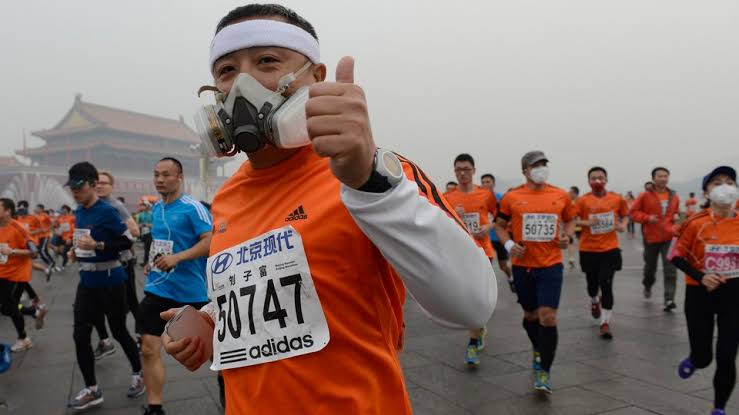
A recent study examining the relationship between air pollution and marathon performance has attracted considerable mainstream media attention (see here). Researchers from the University of Leicester analysed 2,756,553 performances recorded across the world’s six major marathons—Berlin, Boston, Chicago, London, New York and Tokyo—between 2010 and 2024.
The researchers compared finishing times with race-day concentrations of two major pollutants: nitrogen dioxide (NO₂) and PM2.5. The most striking finding was that every 1 µg/m³ increase in NO₂ was associated with finishing times that were 1.43 minutes slower for men and 1.56 minutes slower for women. By contrast, PM2.5 was not significantly associated with slower performance.
The study also produced several other interesting findings. Air pollution appeared to affect recreational runners approximately six times more than elite runners, suggesting that elite athletes may be better able to cope with its effects. Younger runners also appeared to be more affected. Among those aged 18–29, every 1 µg/m³ increase in NO₂ was associated with an approximately 2.17-minute increase in finishing time, compared with 1.32 minutes among runners aged 60 and over.
It is important to remember that this was an observational study, so it cannot establish that air pollution directly caused slower marathon times. Nevertheless, the analysis of more than 2.7 million performances makes the findings compelling and raises an important question: could air pollution be costing marathon runners valuable minutes?
Only 1 in 10 coaches consider the menstrual cycle when planning training

A new study showed that there remains a significant knowledge-to-practice gap when it comes to the menstrual cycle and female athletes. The study surveyed 261 coaches (51% female and 49% male) and found that coaches rated their knowledge of the menstrual cycle at an average of 6.4/10. However, despite coaches reporting a reasonable level of knowledge about the menstrual cycle, only 10% actually considered menstrual cycle information when planning training, while nearly half admitted to not tracking their athletes’ menstrual cycles at all.
Encouragingly, coaches rated their willingness to learn more about the menstrual cycle at a solid 8.5/10, while the majority felt the topic wasn’t sufficiently covered in coach education. So, it’s good to see that coaches want to better understand and consider the menstrual cycle, but it is certainly concerning that only 1 in 10 currently use this information when planning training.
If you would like to learn more about the menstrual cycle, check out our new course Menstruation in Sport and our blog Understanding and Approaching the Entire Menstrual Cycle: A Guide for Coaches.
From us this week:
>> New course: Observation Before Intervention: Building Better Coaching Environments
>> New podcast: How to Develop Strength, Speed and Power in Young Athletes
>> New infographic: Football Conditioning Small Sided Games
>> New article: ESSA and Science for Sport Announce Strategic Professional Development Partnership
Access to a growing library of sports science courses
SFS Academy is an all-access membership to premium sports science education.
With SFS Academy, you’ll learn from some of the best coaches around the world as they teach you how to apply the latest research and practice with your athletes.