This week in the world of sports science, here’s what happened…
- Eccentric training: strength and flexibility combined?
- The fitness tests used by Premiership rugby clubs
- Maro Itoje’s secret to career longevity
Eccentric training: strength and flexibility combined?

A very interesting and cleverly designed new study has shown that eccentric training may improve flexibility just as effectively as static stretching. Participants completed a 10-week intervention, training three times per week. The researchers used a within-subject design, whereby one leg performed eccentric-only hamstring training while the other performed conventional static hamstring stretching. This meant that each participant effectively acted as their own control.
The results showed similar improvements in joint range of motion following both interventions. However, the eccentric-trained leg also experienced significantly greater increases in hamstring strength and muscle size, highlighting an important additional benefit of eccentric training.
Therefore, while both methods appear effective for improving hamstring flexibility, eccentric training may offer coaches and athletes a more time-efficient approach by simultaneously targeting flexibility, strength and muscle size.
If you would like to learn more about eccentric training, our course Eccentric Training by Thomas Stringwell is well worth checking out.
The fitness tests used by Premiership rugby clubs
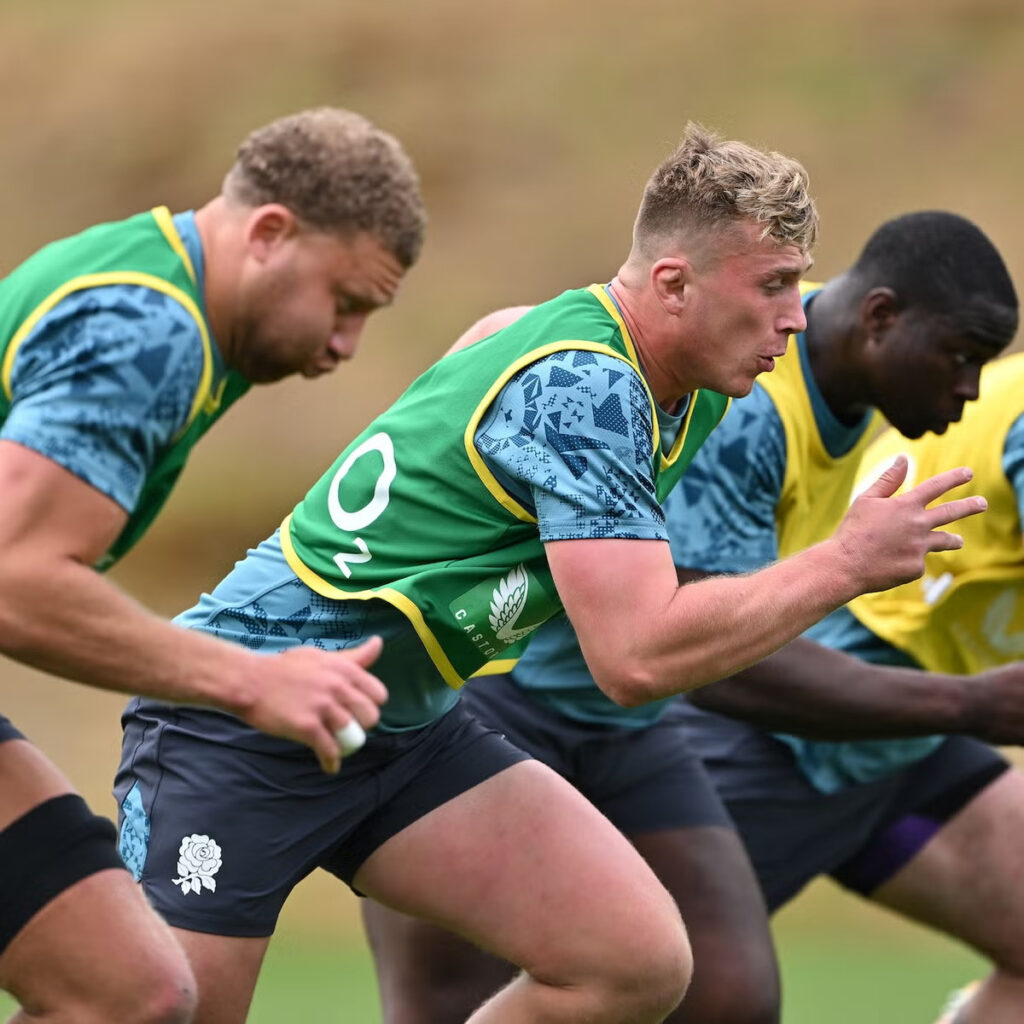
With the new Premiership Rugby season approaching, clubs have been putting their players through a range of gruelling pre-season fitness tests. A recent article published in The Times has shed some light on the various tests being used across the league.
Unsurprisingly, the Bronco Test remains a popular choice among Premiership clubs. The article reports that Gloucester and England centre Seb Atkinson recorded an impressive time of 4 minutes 8 seconds, believed to be one of the fastest Bronco performances ever recorded in professional rugby. Saracens are another club that utilise the Bronco Test, but they also complete an additional beep-style test immediately afterwards, known as the “Fight Test”. It appears that the Fight Test is designed to assess players’ work rate while already fatigued from the preceding Bronco Test, although details surrounding the exact protocol remain limited.
Gloucester, meanwhile, have introduced their own unique fitness test known as the “Shed Challenge”. The name comes from the club’s famous Shed stand at Kingsholm, which is approximately 105 metres long. Working in pairs, players begin by pushing a 105 kg sled along the 105-metre length of the Shed. They then flip and roll a tractor tyre over the distance before finishing the challenge by carrying sandbags up and down every set of stairs in the Shed.
While scientific research validating the Shed Challenge as a fitness test is understandably going to be difficult to find, there can be little doubt that it serves a purpose beyond simply testing physical fitness. By incorporating one of the most recognisable features of Kingsholm into the challenge, Gloucester have created a demanding physical test that also helps reinforce a strong and unique club identity.
So, while Premiership rugby clubs are utilising a mixture of traditional and more unconventional fitness tests during pre-season, the Bronco Test appears to remain one of the most popular choices. If you are interested in this topic, be sure to check out our highly relevant blog Preseason rugby training schedule: Six core principles.
Maro Itoje’s secret to career longevity

Maro Itoje (Image: Yahoo Sports)
While we are on the topic of rugby, Maro Itoje has recently made headlines with his interesting take on career longevity (see here). Itoje skipped England’s July Test matches, giving him what he described as his first proper summer break in 12 years.
Having earned over 100 England caps and toured three times with the British & Irish Lions, Itoje has accumulated an enormous playing and travel load throughout his career. He believes the planned summer break has left him feeling physically and mentally refreshed and suggests that extended periods away from the sport could be key to prolonging international careers.
Interestingly, this story echoes a previous bulletin I wrote on cycling legend Tadej Pogačar (see here), whose philosophy was that sometimes “the best recovery can be to stay on the sofa and do nothing.” With the competitive and travel demands of elite sport continuing to increase, perhaps the secret to career longevity isn’t always doing more, but ensuring athletes have genuine periods of extended rest where they can simply switch off.
It will be interesting to see how Itoje performs this season following his first proper summer break in over a decade.
From us this week:
>> New course: Micronutrients for Athletes
>> New podcast: How the NFL’s Best Practitioners Use Performance Data
>> New infographic: Whole Food Sources with 20-30g of Protein
>> New article: Hydrotherapy
Access to a growing library of sports science courses
SFS Academy is an all-access membership to premium sports science education.
With SFS Academy, you’ll learn from some of the best coaches around the world as they teach you how to apply the latest research and practice with your athletes.