This week in the world of sports science, here’s what happened…
- Relative Age Effect at the recent FIFA Under-17 World Cup
- “Ability opens doors, standards keep them open”
- The validity and reliability of the Leg Lateral Reach Test
Relative Age Effect at the recent FIFA Under-17 World Cup
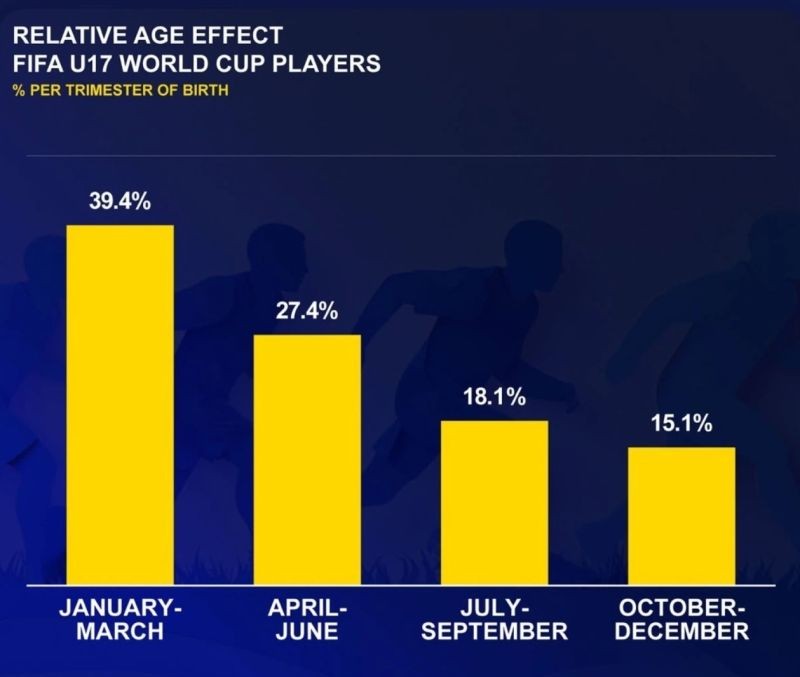
Goran Roksandić recently highlighted on LinkedIn the persistent issue of the Relative Age Effect in youth football. He pointed to the recent FIFA Under-17 World Cup as a telling example of this phenomenon.
When analysing the birth months of the players who participated in the tournament, it’s striking to note that nearly 40% were born in the first quarter of the year (January to March), while only 15% were born in the last quarter (October to December). These findings clearly indicate a strong bias in youth football favouring players born earlier in the year, who often mature faster and exhibit physical advantages over their peers born later in the year.
This evidence underscores the urgent need for greater awareness and proactive measures within football to address the bias stemming from the Relative Age Effect. If you’re interested in delving deeper into this topic, we recommend you check out our course, Relative Age Effect and blog, Relative Age Effect, for more insights.
“Ability opens doors, standards keep them open”

Experienced youth football coach Myles Cooper recently shared a powerful post on LinkedIn. In his post, he highlights a troubling trend among under-18 football players who believe that talent alone is what counts. As Cooper points out, these young athletes often overlook the essential qualities that make someone a good person, such as timekeeping, effective communication, positive body language, respectful behaviour, and how they handle feedback.
From his own experience, Cooper emphasises that the players who successfully make the jump to professional football are those who appreciate the significance of professionalism in their daily lives. They understand the value of dedicating themselves to the hard, unglamorous work that builds character, rather than feeling entitled to success simply because of their natural talent.
If you work with young athletes, it’s crucial to pass on the message Cooper shares. As he wisely notes, “Ability opens doors, but standards keep them open.” This is a lesson worth instilling in every aspiring young athlete.
The validity and reliability of the Leg Lateral Reach Test
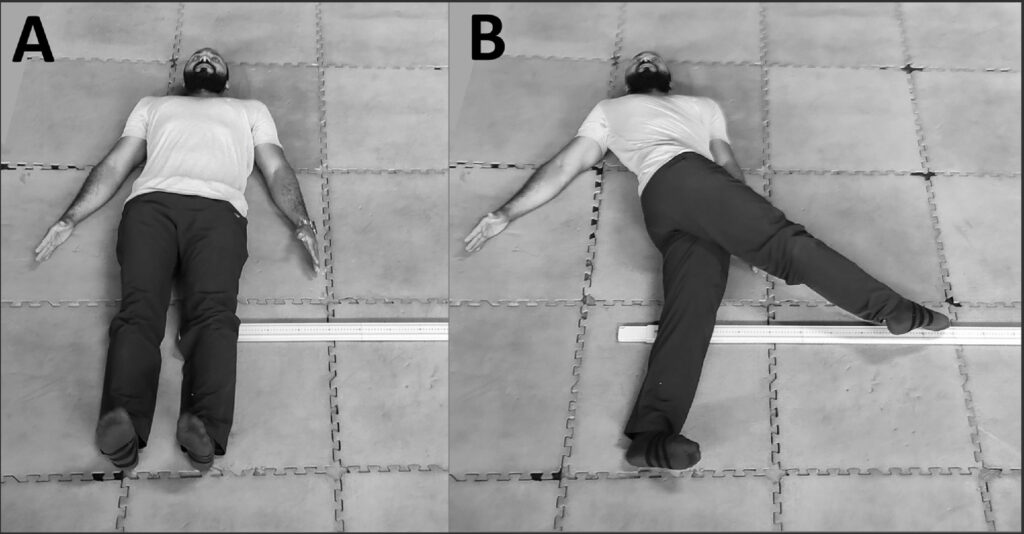
Trunk rotation flexibility plays a crucial role in tennis, making it essential to assess and monitor this aspect to reduce the risk of injury and enhance performance. One effective method for measuring trunk rotation flexibility is the Leg Lateral Reach Test. This test requires a participant to lie on their back with legs straight and arms positioned at their sides. The individual then lifts one leg and reaches it across their opposite leg as far as possible, all while keeping both shoulders flat on the floor.
A recent study explored the reliability and validity of the Leg Lateral Reach Test specifically in adolescent tennis players. The research looked into several factors, including inter-rater reliability, intra-rater reliability, test-retest reliability, the minimum detectable change in results, and how the test correlated with the seated rotation test.
The findings indicated that the Leg Lateral Reach Test is a valid and reliable tool for assessing trunk rotation flexibility. While the study demonstrated excellent inter-rater reliability, it was disappointing that only two raters were involved. Nonetheless, while further large-scale research is needed, this study positively highlights the Leg Lateral Reach Test as a strong option for evaluating and monitoring trunk rotation flexibility in tennis players.
From us this week:
>> New course: Fundamental Movements in Youth
>> New podcast: Building Better Athletes. Michigan’s High-Performance Approach with Lew Porchiazzo
>> New infographic: Core Training
>> New article: Hydrotherapy
Access to a growing library of sports science courses
SFS Academy is an all-access membership to premium sports science education.
With SFS Academy, you’ll learn from some of the best coaches around the world as they teach you how to apply the latest research and practice with your athletes.