
This week in the world of sports science, here’s what happened…
- Is VO₂ max a performance “cheat code” in anaerobic sports?
- How Niklas Süle fooled his Bayern Munich manager
- Benjamin Šeško’s secret technique to sharpen focus
Is VO₂ max a performance “cheat code” in anaerobic sports?

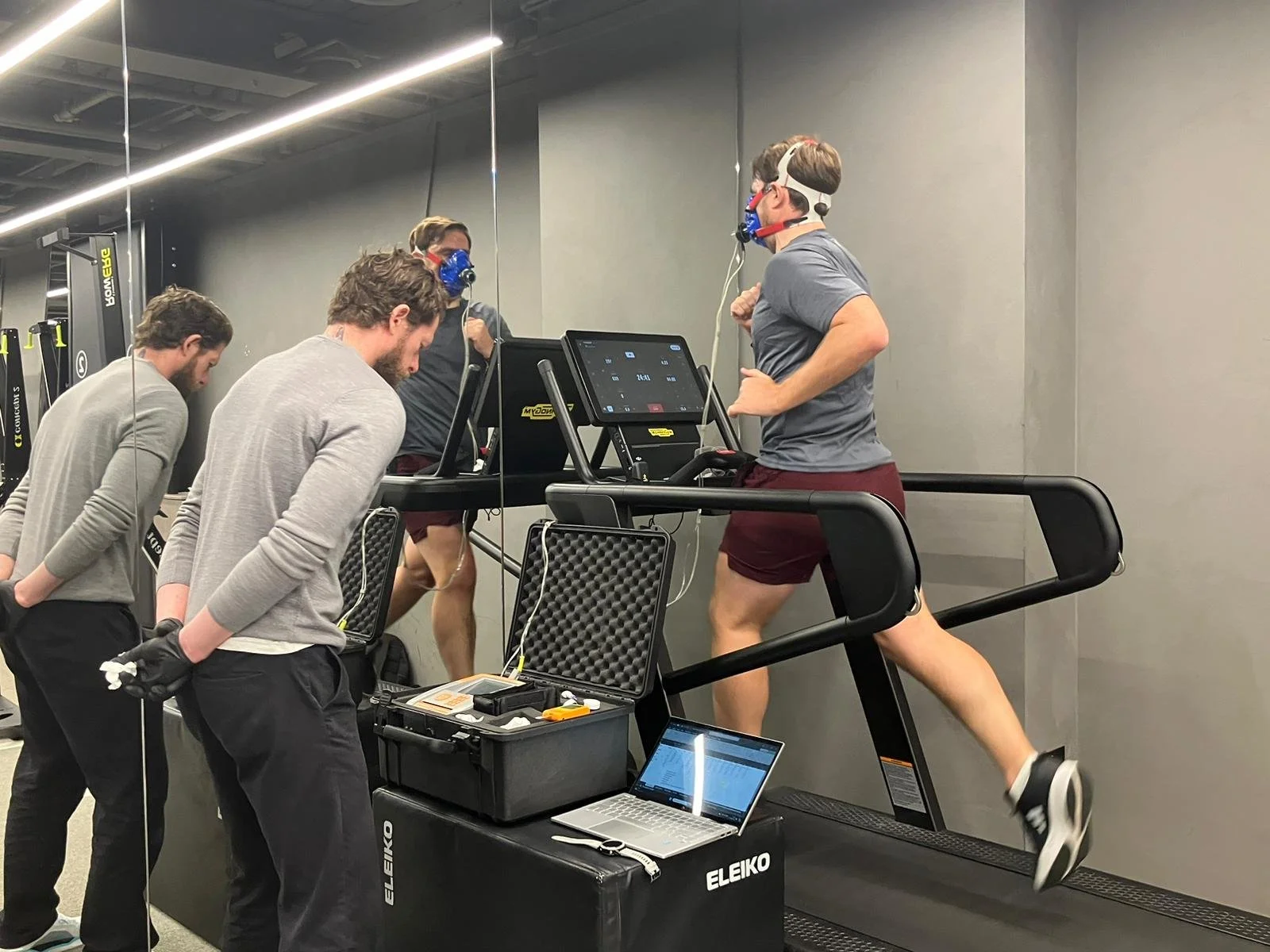
When we hear the term VO₂ max, we naturally think of aerobic sports. However, renowned coach Mike Young recently shared an Instagram reel that might change your perspective on the significance of VO₂ max in anaerobic sports. As Young puts it, VO₂ max is “a performance cheat code”, even in anaerobic sports.
In the reel, Young explains that having an above-average VO₂ max score enhances an athlete’s ability to deliver and utilise oxygen. This improvement leads to greater work capacity and faster recovery between intense efforts. With a higher VO₂ max, athletes can better withstand fatigue and sustain their performance during repeated sprints, jumps, or heavy lifting.
He further explains that athletes with an above-average VO₂ max experience less decline in speed, power, and decision-making during training sessions and games. Moreover, they can recover more quickly between training sessions, enabling them to handle a greater training volume.
So, even in anaerobic sports, a higher VO₂ max enhances overall performance and developing it shouldn’t be neglected. If you would like to learn more about VO₂ max, check out our blog VO₂ Max and our course Aerobic Conditioning.
How Niklas Süle fooled his Bayern Munich manager

Earlier this month, German footballer Niklas Süle announced that he would be retiring this summer at just 30 years old, primarily due to ongoing injury problems. In a recent podcast, Süle opened up about the extreme physical demands he placed on his body and the mental strain it took on him.
Throughout his career, Süle’s fitness level was often questioned. During his time at FC Bayern Munich, then-manager Jupp Heynckes implemented mandatory player weigh-ins every Thursday. Süle revealed that to prepare for these weigh-ins, he would fast on Wednesdays and spend Wednesday nights wrapped in a raincoat in a sauna. While he seemingly met his weight targets for management and support staff, by the time he took the field on Saturday, he was back at his usual weight. In reality, he hadn’t been losing weight; instead, he was using a boxing or MMA-style weight cut to dehydrate himself each week for the weigh-in, fooling his manager.
Süle also admitted that after the weigh-in, he would often stick his head out of a window for several minutes, hoping the fresh air would prevent him from passing out. This method of weight cutting is certainly not advised for professional footballers, and it’s very plausible to suggest that it contributed to his early retirement.
If you want to know more about the potential dangers of weight cuts, check out our excellent blog by Dr James Morehan, The severely detrimental effects of making weight the wrong way.
Benjamin Šeško’s secret technique to sharpen focus

Manchester United F.C. striker Benjamin Šeško recently opened up in an interview with Sky Sports about how he incorporates Box Breathing into his daily routine and before games to help him relax and sharpen his focus.
Box Breathing is a meditation technique that involves engaging in continuous 16-second breathing cycles, usually practised for three to five minutes. The 16-second cycle consists of four steps:
- Inhale slowly and deeply through your nose for four seconds.
- Hold your breath for four seconds.
- Exhale gently through your mouth for four seconds.
- Hold with your lungs empty for four seconds.
Šeško emphasises that reaping the benefits of Box Breathing requires practice, time, and patience. If you’re interested in exploring more breathing techniques, be sure to check out our podcast episodes:
- Breath-Holding Improves Physical Performance
- Are You Breathing Wrong? How You Can Use Nasal Breathing To Improve Performance
- Could Poor Breathing Be Destroying Your Performance?
From us this week:
>> New course: Socially Supporting Athletes
>> New podcast: Preparing for the World Cup: Physical Performance Under Extreme Pressure
>> New infographic: V02 Max
>> New article: Hydrotherapy
Access to a growing library of sports science courses
SFS Academy is an all-access membership to premium sports science education.
With SFS Academy, you’ll learn from some of the best coaches around the world as they teach you how to apply the latest research and practice with your athletes.