This week in the world of sports science, here’s what happened…
- Fitbit vs Whoop
- Can poor coaches hide behind the constraints-led approach?
- Hill sprints, farmer carries, and overspeed treadmill training
Fitbit vs Whoop
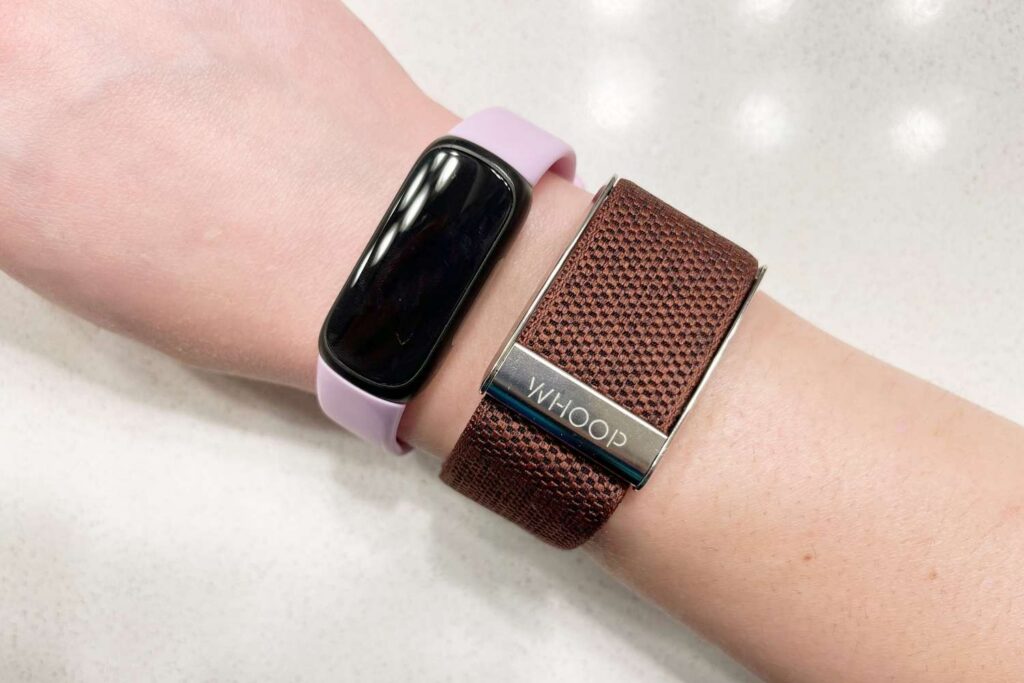
A recent YouTube video by Rob ter Horst, known as “The Quantified Scientist,” has sparked an engaging debate among Fitbit and Whoop users. In his video, Horst compares the Fitbit Air to the Whoop Strap, drawing insights from the latest research and testing available.
When it comes to sleep tracking accuracy, Horst noted that the Fitbit Air consistently outperformed the Whoop Strap, which tends to overestimate both deep sleep and REM sleep. For heart rate monitoring, both devices did an excellent job while running and during indoor cycling. However, they each faced challenges during weight training, primarily because wrist tension and the act of gripping weights can affect their accuracy.
In terms of user experience, Horst suggested that the Fitbit app appeals more to casual health users, while the Whoop app is favoured by athletes. He also pointed out that the Whoop’s battery life is significantly superior to that of the Fitbit.
Ultimately, choosing between the two devices is tough. Horst believes that for most people looking for reliable tracking data, the Fitbit Air is the smarter buy. However, for those who seek coaching, recovery insights, strain targets, and motivational nudges, the Whoop Strap justifies its higher price tag.
Can poor coaches hide behind the constraints-led approach?

Experienced cricket coach Tom Flowers recently stirred up discussion with a controversial post on LinkedIn regarding the constraints-led approach (CLA). While he acknowledges the value of CLA and incorporates it into his coaching, he strongly believes it has led to an increase in what he calls “frauds” in coaching. According to Flowers, this approach gives poor coaches an “opportunity to hide behind deficiencies”.
He argues that those who implement the CLA often take a step back, with their “arms folded,” claiming they have created an environment where players are encouraged to “self-organise” and find solutions themselves. However, while Flowers recognises the importance of giving players time for self-exploration, he insists there are moments when the coach must “step in and actually coach.” He emphasises that players need feedback, technical understanding, and someone who can help them identify and solve problems.
In Flowers’s words, “the best coaches aren’t loyal to one methodology alone. They’re loyal to player development, knowing what works for them, and not being afraid to ‘coach’ players, expecting them to stand, listen and be patient”.
So, do you agree with Flowers? Are there too many poor coaches who lack technical understanding and communication skills, and hide behind the CLA?
If you would like to learn more about this topic, check out our courses Skill Acquisition and Cueing & Coaching Methods.
Hill sprints, farmer carries, and overspeed treadmill training

In a recent YouTube video, renowned S&C coach Chris Barnard of Overtimeathletes explored some training techniques he feels are either overrated or underrated.
He kicked things off by discussing hill sprints, which Barnard argues are underrated. He believes this age-old training method is exceptional for teaching acceleration mechanics but is often overlooked in favour of more high-tech training methods.
Next up was overspeed treadmill training, which Barnard considers overrated. He points out that it can actually hinder proper max velocity mechanics, leading to undesirable effects.
Finally, when asked about farmer carries, Barnard firmly stands by their value. He praises them as a fantastic total body exercise and notes that they are relatively safe, making them a worthy addition to any training regimen.
So based on Barnard’s views, we should keep hill sprints and farmers carries and stop doing overspeed treadmill training. Do you agree with Barnard?
From us this week:
>> New course: Socially Supporting Athletes
>> New podcast: The Unseen Work of S&C and Sports Science
>> New infographic: Stretch Shortening Cycle
>> New article: Hydrotherapy
Access to a growing library of sports science courses
SFS Academy is an all-access membership to premium sports science education.
With SFS Academy, you’ll learn from some of the best coaches around the world as they teach you how to apply the latest research and practice with your athletes.