
This week in the world of sports science, here’s what happened…
- Should footballers lift weights immediately after a match?
- How England rugby integrates neck strength training
- Nike launches Project Shield to tackle ACL injuries in female athletes
Should footballers lift weights immediately after a match?
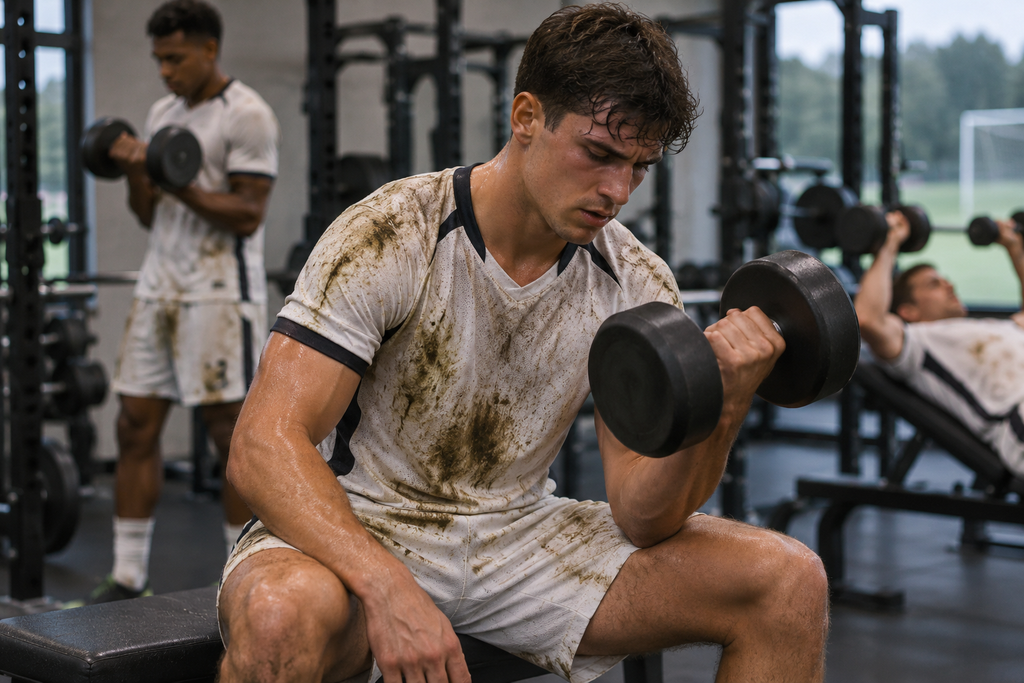
Leading S&C coach Mike McGurn has put forward an interesting argument on one of the more controversial topics in football performance: should players lift weights immediately after a match? The post can be found here.
McGurn acknowledges that his approach often receives pushback from coaches and players, particularly as the idea of completing a lower-body strength session immediately after 90 minutes of football can seem counterintuitive. However, he believes there is a strong rationale behind the method, especially given the increasingly congested fixture schedules in professional football.
His argument centres on the significant physical and central nervous system demands of match play, with neuromuscular recovery potentially taking up to 72 hours. McGurn believes that waiting until match day +1 or match day +2 to complete a meaningful lower-body strength session may actually interrupt the recovery process by introducing another substantial training stimulus.
Instead, he advocates consolidating the physical stress into a single day. By completing a strength session immediately after the final whistle, players can effectively stack their match and gym workloads together, potentially leaving the following 48–72 hours uninterrupted for recovery.
Of course, the approach raises some interesting questions. Would players be capable of producing a meaningful strength stimulus after the physical demands of a competitive match? Could the additional training load prolong recovery rather than improve it? And would this strategy be more appropriate for strength maintenance than strength development?
It’s certainly an interesting argument and one that challenges how we traditionally approach strength training during congested competitive schedules.
How England rugby integrates neck strength training
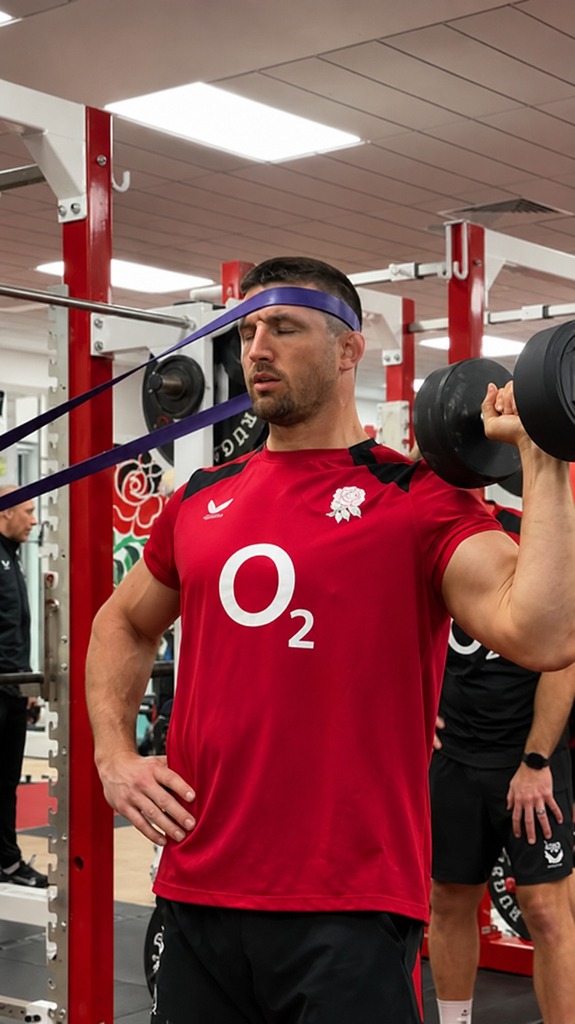
A recent social media post by Kate Davis, Senior Physiotherapist at England Rugby, offered an interesting insight into how the England rugby team is incorporating neck-strengthening exercises into its S&C program.
Neck-strengthening exercises are often performed in isolation. However, England Rugby’s approach highlights how the neck muscles work closely with the shoulders and upper back, suggesting neck training can also be integrated into conventional strength exercises.
In the post, players perform dumbbell shoulder presses, rows and face pulls while maintaining an isometric neck contraction against resistance from a band attached to a rack. This allows players to challenge their neck muscles alongside upper-body movements, potentially developing their ability to maintain neck stability under different loading conditions.
Rather than treating neck strengthening solely as a series of isolated exercises, this example shows how it can be incorporated into broader strength training sessions. Davis also acknowledged her collaboration with England Rugby’s lead S&C coach, Daniel Tobin, highlighting the importance of collaboration between medical and S&C practitioners. By working together, physiotherapists and S&C coaches can develop a coordinated training programme that integrates injury risk reduction, physical preparation and performance development.
Nike launches Project Shield to tackle ACL injuries in female athletes
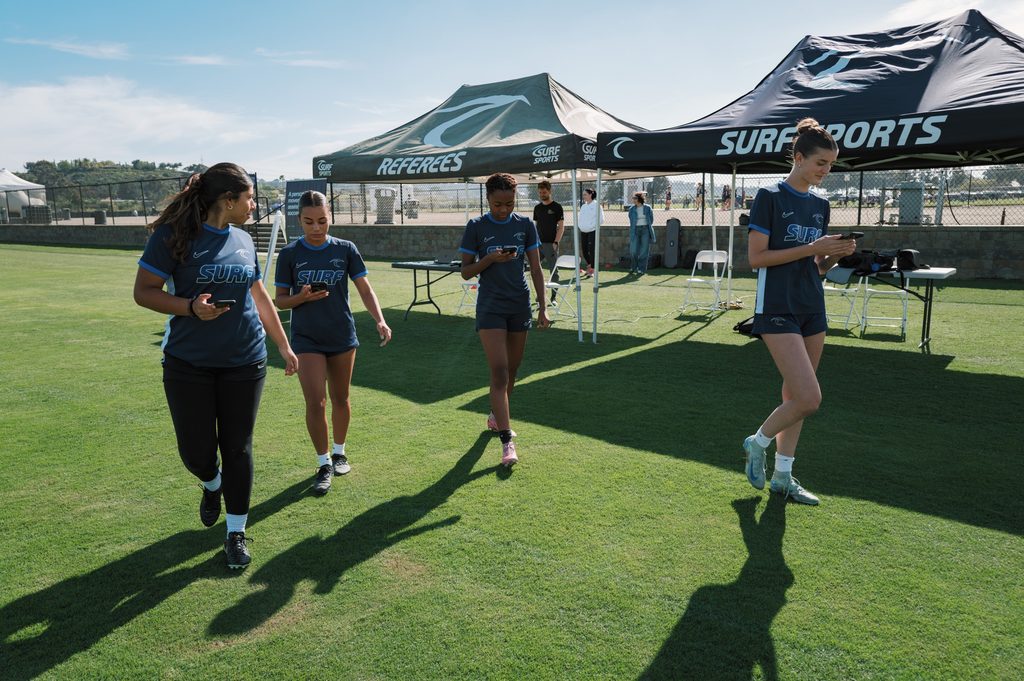
There has been a very interesting sports science development recently, with Nike announcing the launch of Project Shield: Protect to Perform, an initiative aimed at reducing ACL injuries in female athletes (see here).
The initiative is a major sports science collaboration bringing together three leading American universities to investigate why female athletes experience disproportionately high rates of ACL injuries and, importantly, how these injuries may be prevented. The project brings together the Nike Sport Research Lab, Stanford University, Emory University and the University of Oregon, with an initial focus on female athletes, particularly footballers.
Nike highlighted several concerning statistics that further emphasise the importance of this initiative. For example, existing research suggests that female athletes are approximately three to five times more likely to sustain an ACL injury than male athletes. Furthermore, ACL injury rates among female high school athletes in the United States have reportedly increased by 32% over the past 15 years.
Alongside this collaboration, Nike is also testing a smartphone application called NSRL Form for Field. The technology uses AI-powered pose estimation to analyse how footballers move, allowing athletes to complete movement assessments using their smartphone cameras rather than relying on expensive laboratory equipment. The aim is to use these movement assessments to better understand athletes’ movement patterns and potentially develop more individualised injury-prevention strategies.
It will be particularly interesting to see how this new Nike project develops and whether the combination of sports science research and AI-powered smartphone technology can have a significant impact on reducing the risk of ACL injuries in female athletes.
From us this week:
>> New course: Observation Before Intervention: Building Better Coaching Environments
>> New podcast: Can AI Understand Human Movement?
>> New infographic: What Movement Situations Lead to an ACL Injury in Sport?
>> New article: ESSA and Science for Sport Announce Strategic Professional Development Partnership
Access to a growing library of sports science courses
SFS Academy is an all-access membership to premium sports science education.
With SFS Academy, you’ll learn from some of the best coaches around the world as they teach you how to apply the latest research and practice with your athletes.