This week in the world of sports science, here’s what happened…
- Should we forget about ice baths and cold showers after training?
- The growing popularity of virtual reality training tools in football
- Is voodoo flossing really that magical?
Should we forget about ice baths and cold showers after training?
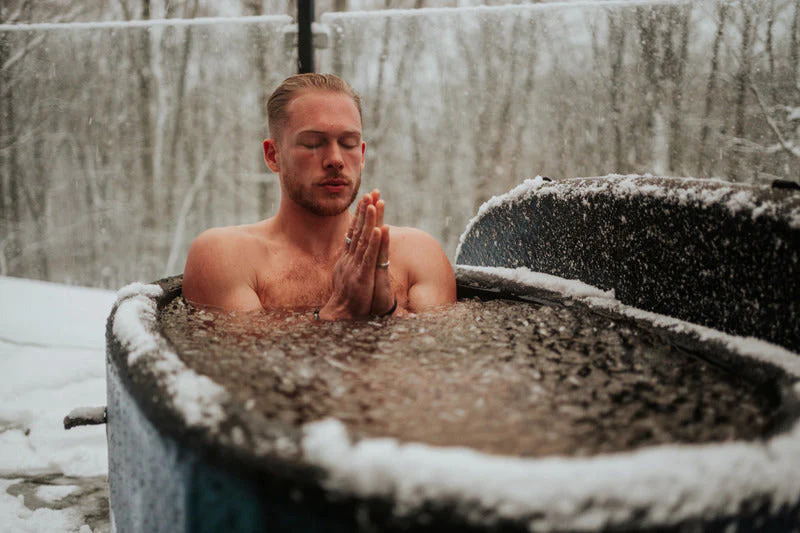
An intriguing article has been making waves online and could change our perception of ice baths and cold showers! The piece highlights insights from Dr Freya Bayne, a sport and exercise scientist at London South Bank University, who recently co-authored research published in The Journal of Physiology. This study compares the effects of cold and hot water immersion following a simulated muscle injury.
Dr Bayne’s research revealed that hot water immersion appeared to facilitate a faster muscle recovery than cold water treatment. The study identified four key reasons why heat may enhance muscle recovery. Firstly, it promotes better circulation, ensuring that more oxygen and nutrients reach the injured muscles while speeding up the removal of waste products. Secondly, heat activates “heat shock” proteins, which help protect muscle fibres and aid in cellular repair. Thirdly, it seems to expedite the body’s transition from the initial inflammatory response to the healing phase, potentially reducing recovery time. Lastly, heat appears to support the muscle-building pathways responsible for tissue repair and regeneration—pathways that cold exposure might hinder.
Interestingly, Dr Bayne does not dismiss the benefits of cold-water immersion; she acknowledges its role in numbing pain and its positive mental health effects. However, she hopes her findings will encourage a rethink of the commonly held belief that “ice is the best for injury.”
If you are interested in this topic, our podcast episodes How Cold And Heat Exposure Can Fast-Track Your Recovery – And How To Do It Safely and How To Use Hot & Cold To Optimise Recovery are well worth a listen!
The growing popularity of virtual reality training tools in football

Chelsea F.C. footballer Romeo Lavia has recently made headlines for using “Be Your Best,” a virtual reality training tool that helps players hone their decision-making, scanning, and overall game intelligence.
Notably, several high-profile footballers, including Arsenal F.C. captain Martin Ødegaard and Real Madrid’s Aurélien Tchouaméni, are also regular users of this innovative training tool. Recognised as an industry leader, Be Your Best is currently utilised in over 80 countries by around 10,000 players and more than 100 clubs.
Co-founded by Professor Geir Jordet, whose research on visual scanning in football laid the groundwork for this tool, Be Your Best is rapidly gaining traction. While its popularity seems to be on the rise, it will be fascinating to see whether virtual reality training tools are a passing trend or a staple of the training regimes of elite football players. Stay tuned for developments!
If you would like to learn more about virtual reality, check out our blogs Virtual reality for sports training: Can VR help athletes? and Virtual reality for sports training: How VR can help pro and amateur athletes (and fans).
Is voodoo flossing really that magical?

Tissue flossing, often called “voodoo flossing,” is a therapeutic method that involves wrapping elastic latex bands tightly around muscles to compress the surrounding tissues. This technique is thought to enhance range of motion, alleviate pain, and boost recovery and athletic performance.
A recent systematic review and meta-analysis involving 20 studies and 480 participants examined the acute effects of tissue flossing. The researchers found that while it offers a slight improvement in range of motion, it does not significantly reduce pain or enhance performance in athletic activities such as sprinting or jumping.
However, the researchers noted that the effectiveness of tissue flossing varied based on individual and intervention factors, such as gender and band pressure. While there is a need for more rigorous interventions and concrete research, the existing evidence on tissue flossing doesn’t seem so “voodoo” after all!
From us this week:
>> New course: The Role of a Performance Analyst
>> New podcast: Why Female Physiology Still Needs Greater Attention in Sport with Dr Candice Macmillan
>> New infographic: Nutrition For ACL Rehabilitation
>> New article: Hydrotherapy
Access to a growing library of sports science courses
SFS Academy is an all-access membership to premium sports science education.
With SFS Academy, you’ll learn from some of the best coaches around the world as they teach you how to apply the latest research and practice with your athletes.