
This week in the world of sports science, here’s what happened…
- Could virtual reality be the future of agility training and injury prevention?
- Is creatine safe for young athletes?
- When to return to driving following a concussion
Could virtual reality be the future of agility training and injury prevention?

A fascinating new study has produced some very promising findings on the potential of virtual reality (VR) training. The researchers recruited 70 university-level basketball players and divided them equally into two groups: a virtual reality-assisted neuromuscular training group and a conventional neuromuscular training group. Both groups then completed a 12-week training intervention.
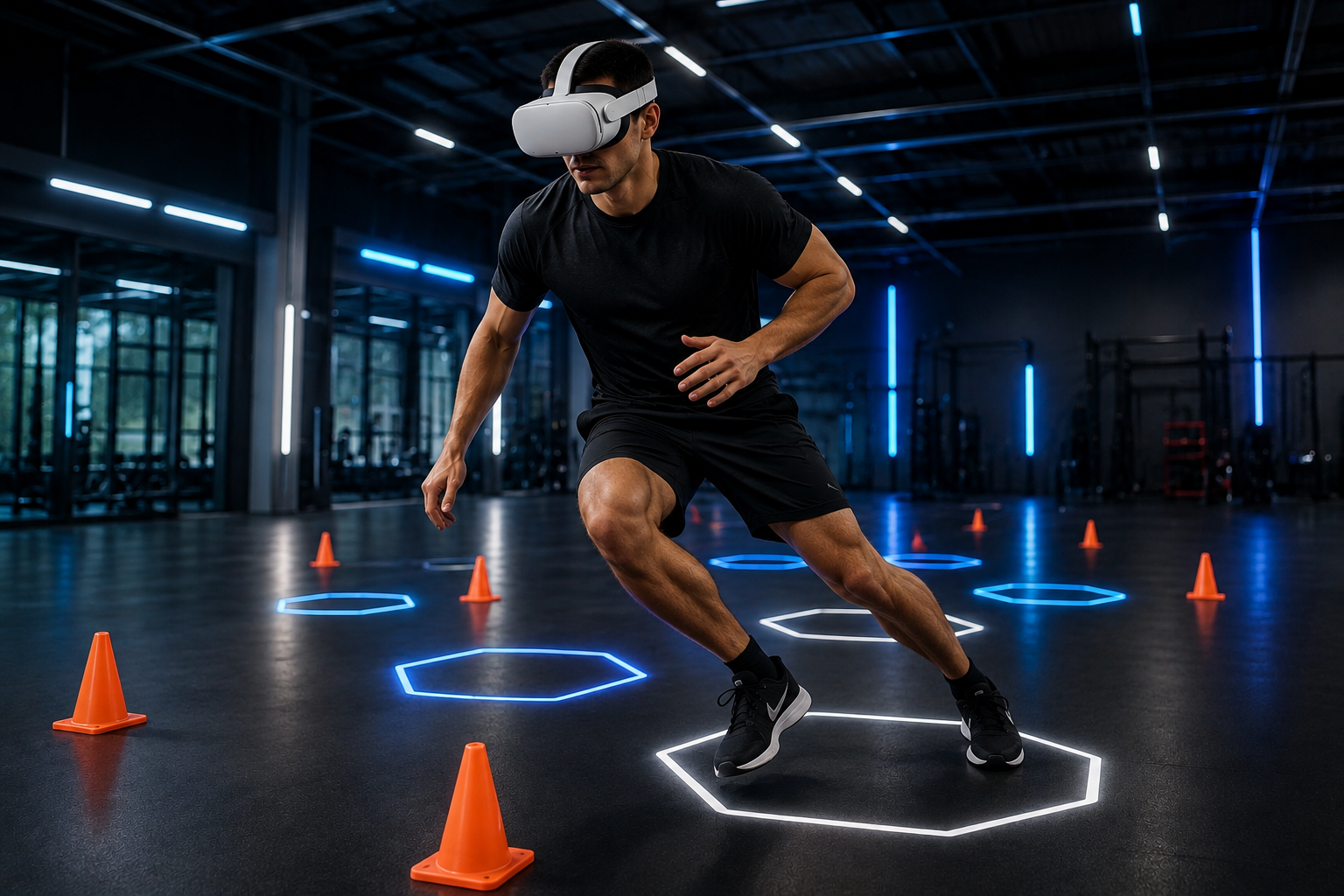
The basketball players in the VR-assisted group wore HTC Vive Pro headsets alongside Xsens motion sensors, and their training focused on dynamic balance, reactive agility, plyometrics, and basketball-specific movements. The results were impressive. When agility was assessed following the intervention, the VR-assisted group achieved substantially greater improvements on both the T-Test and Hexagon Test than the conventional training group. The neuromuscular findings were equally encouraging, with the VR-assisted group demonstrating notably greater improvements in reactive strength index (RSI), proprioceptive accuracy, and dynamic knee valgus.
One particularly interesting advantage of VR training is its ability to provide athletes with immediate feedback while they are actually performing a movement. By detecting changes in joint positioning, the technology can provide instant visual and aural feedback, allowing athletes to identify and correct movement issues in real time.
So, could virtual reality become part of the future of agility training and injury prevention? Based on the findings of this study, that possibility no longer seems particularly far-fetched. However, while the improvements in agility and several injury-related biomechanical measures are certainly promising, the study did not measure actual injury rates. Therefore, considerably more research is needed before VR training can be considered an effective injury-prevention strategy.
If you would like to learn more about VR training, check out our blogs Virtual reality for sports training: How VR can help pro and amateur athletes (and fans) and Virtual reality for sports training: Can VR help athletes?
Is creatine safe for young athletes?

Leading sports and exercise scientist Paul Hough published an insightful post on LinkedIn regarding young athletes and their use of creatine. He reviews the current evidence surrounding creatine supplementation in this population based on existing literature.
Hough notes that while evidence on creatine use in children and adolescents is limited, the available research suggests that it is generally safe. According to the studies, a dosage of 0.1 to 0.3 grams of creatine per kilogram of body mass per day is considered safe. However, there is very little research on the effectiveness and safety of higher doses. Some individuals may employ a rapid loading phase, taking 0.3 g/kg four times daily for a week to quickly increase muscle creatine stores. Hough warns that this approach may lead to a higher risk of gastrointestinal discomfort.
Worryingly, Hough highlights research indicating that only 11% of young athletes could answer questions about creatine use correctly. This finding raises concerns about the potential misuse of creatine among young athletes and underscores the need for proper education and adult supervision if young athletes are taking creatine.
While more concrete evidence is needed on the effectiveness of creatine and appropriate supplementation guidelines for young athletes, Hough concludes his post by emphasising that young athletes should prioritise consistent training, sound nutrition, and adequate sleep before even considering taking creatine. This is undoubtedly the most important message.
When to return to driving following a concussion

A highly practical new study has shed light on the often-overlooked issue of driving after a concussion. The research involved 49 young adults who had been diagnosed with a concussion within the past 12 days. Each participant took part in a simulated driving assessment.
The findings revealed a clear trend: the closer the participants were to the day they suffered the concussion, the poorer their driving performance was. Interestingly, driving skills improved as more days passed since the injury, indicating that recovery happens gradually during the first couple of weeks post-concussion.
While return-to-play protocols for athletes have improved, protocols for returning to driving are often neglected. Based on this study’s results, it’s advisable to limit driving for at least the first 24 to 72 hours following a concussion. After that initial period, individuals should follow a gradual return-to-driving approach rather than jumping back in immediately.
From us this week:
>> New course: Micronutrients for Athletes
>> New podcast: Why Athletes Keep Breaking Down
>> New infographic: Sleep Hygiene Protocol
>> New article: Hydrotherapy
Access to a growing library of sports science courses
SFS Academy is an all-access membership to premium sports science education.
With SFS Academy, you’ll learn from some of the best coaches around the world as they teach you how to apply the latest research and practice with your athletes.