This week in the world of sports science, here’s what happened…
- Is isometric training “the most efficient fitness regime”
- An insight into Keely Hodgkinson’s training and mindset
- How does extra time in football matches affect sprinting and landing mechanics?
Is isometric training “the most efficient fitness regime”
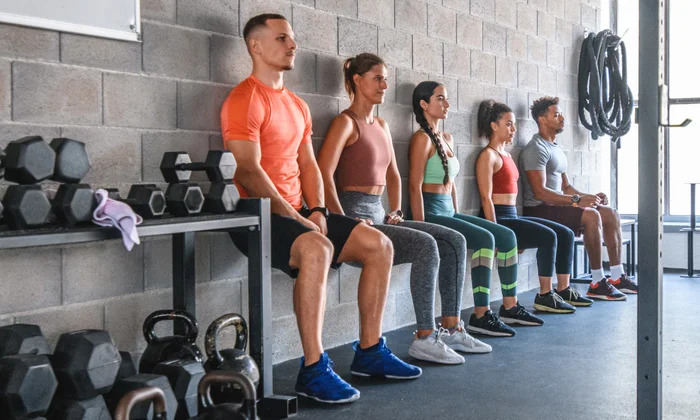
Isometric exercise recently made headlines on BBC News, with an article claiming it to be “the most efficient fitness regime.” The core argument of the piece is that isometric exercises are particularly effective for lowering blood pressure and are incredibly time-efficient.
The article effectively highlights reviews and meta-analyses demonstrating significant reductions in blood pressure with isometric training. It also emphasises the time-saving aspect of this exercise type, noting that substantial health benefits can be gained from just a few brief sessions each week.
However, the title “the most efficient fitness regime” feels like an overstatement. While isometric exercises are simple, time-efficient, and beneficial for lowering blood pressure, they may not be the best option if your goals include building strength across a full range of motion, improving cardiovascular health, enhancing coordination, or improving overall athletic performance. In short, isometric training is just one tool, not the whole toolbox.
If you would like to learn more about isometric training, check out our highly informative course Isometric Training.
An insight into Keely Hodgkinson’s training and mindset
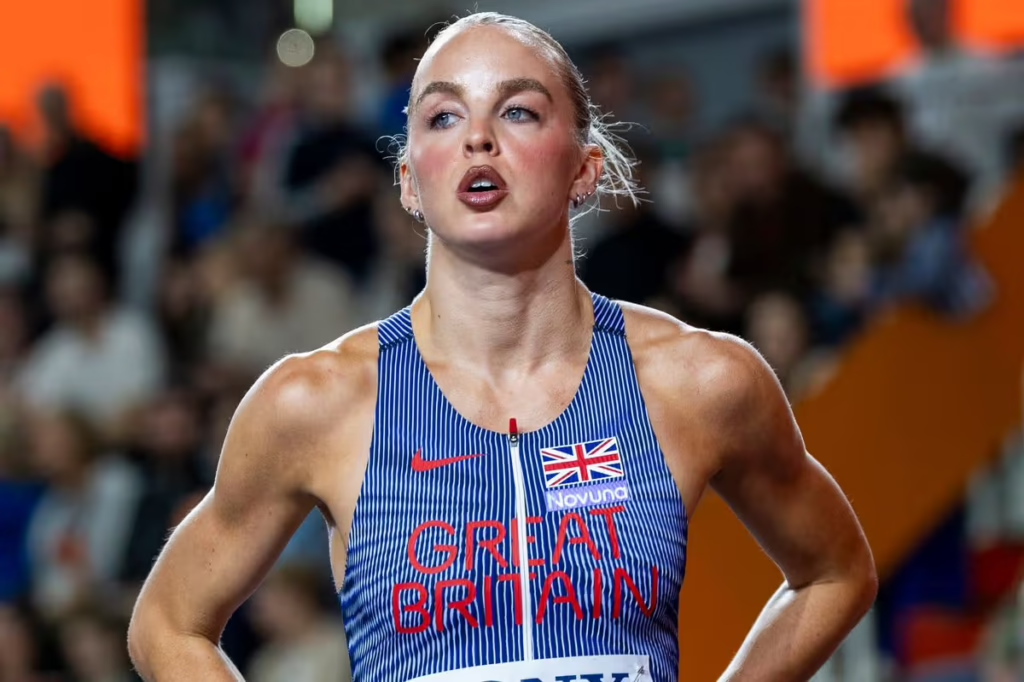
Following her recent victory in the 800 metres at the World Indoor Championships, an intriguing YouTube clip featuring reigning Olympic champion Keely Hodgkinson has resurfaced, offering a fascinating glimpse into her mindset and rigorous preparation. In the interview, Hodgkinson shares that her training sessions push her to the brink of physical shutdown, saying, “the only way to get me there is to keep putting myself through this pain.” She recounts moments where she’s left “on the floor,” “unable to move,” and even “throwing up” from the intensity of her training.
From a training standpoint, her approach is particularly interesting; she reveals that she “never runs 800m in training.” This might challenge conventional beliefs about race-specific training, but her sessions are structured around either faster-than-race pace or slower, more metabolically demanding intervals. It seems her goal isn’t to mimic the race itself but rather to overload the underlying systems in isolation, preparing her to integrate them effectively on race day.
This YouTube clip is definitely worth a watch, providing a remarkable insight into the mindset of an elite athlete at the top of her game and showcasing her incredible ability to confront pain head-on rather than shy away from it. If you would like to learn more about pain management, our course, The Science of Pain Management, is well worth checking out.
How does extra time in football matches affect sprinting and landing mechanics?
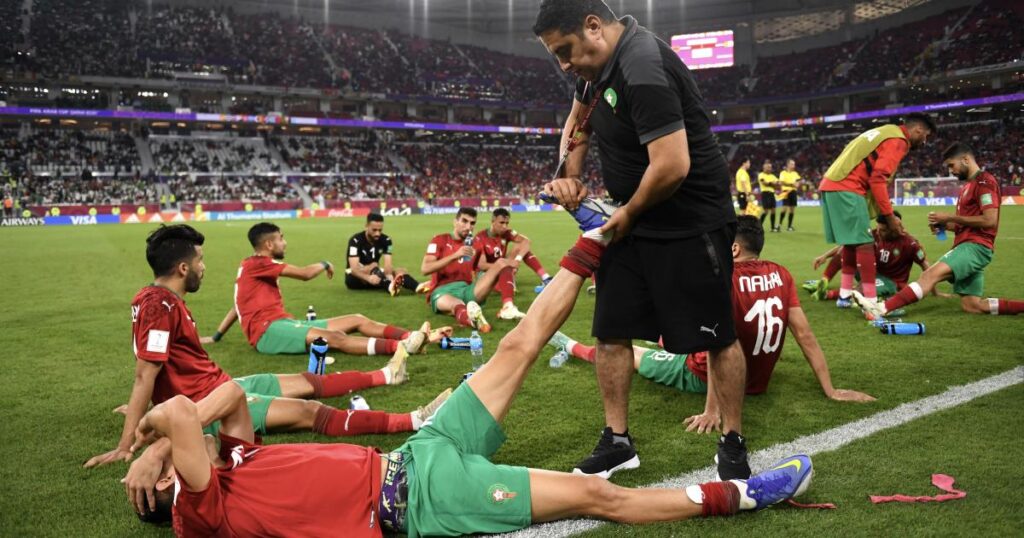
A recent study shed light on how extra time in football matches impacts the sprinting and landing mechanics of players. In the research, 12 semi-professional footballers participated in drop jump, counter-movement jump (CMJ), and 30-metre sprint tests at various intervals: before the match, at half-time (45 minutes), at full-time (90 minutes), and after extra time (120 minutes).
The findings revealed a notable decrease in drop-jump height, which fell by as much as 12.5%, while the average landing force showed a reduction of 4.5% during extra time compared to pre-match levels. Additionally, the time taken for stabilisation after landing increased by 14.3% during extra time, suggesting that players had slower recovery times. The mechanics of sprinting also significantly declined, with the quality of movement deteriorating by 33.4% from the start of the match to extra time. These changes indicate that playing in extra time may adversely affect neuromuscular performance and potentially heighten the risk of injury for players.
Consequently, the use of substitutions and squad rotation becomes crucial when extra time is needed!
From us this week:
>> New course: Performance Analysis in International Football
>> New podcast: Building Durability in Action Sports with Ryan Blake
>> New infographic: Hydrotherapy
>> New article: Hydrotherapy
Access to a growing library of sports science courses
SFS Academy is an all-access membership to premium sports science education.
With SFS Academy, you’ll learn from some of the best coaches around the world as they teach you how to apply the latest research and practice with your athletes.