
This week in the world of sports science, here’s what happened…
- A new drink supplement for concussion?
- Drop the tennis racket to improve speed and change of direction ability!
- New research on optimum Nordic hamstring exercise volume
A new drink supplement for concussion?

The Edinburgh rugby union team has been experimenting with a Norwegian fruit and omega-3 smoothie called EO3 (Enhanced Omega-3) to evaluate its effectiveness in managing concussions. EO3 is packed with wild-caught Atlantic fish, providing 20 grams of protein and 1,600 mg of omega-3 fatty acids, along with vitamins D and E, as well as a variety of carbohydrates and antioxidants.
A project was conducted in collaboration with Edinburgh Rugby, comparing data from the 2022/2023 season to the 2023/2024 season when players incorporated E03 into their diet. The results were promising, showing a 28% decrease in total concussions and a remarkable 54% reduction in recovery time, shortening the average return-to-play period from 28 days to just 13 days.
Omega-3s are well-known for their benefits to brain health, including reducing inflammation and supporting the repair of neuronal membranes. Vitamin D may also play a role in brain recovery, while vitamin E helps guard against oxidative stress. Thus, it’s reasonable to suggest that a combination of these elements could explain the positive outcomes associated with EO3.
However, it’s essential to note that the project is still in its preliminary phase and has not yet been published, so we should approach the findings with caution. Still, it will be fascinating to follow future developments regarding EO3 and its potential benefits in protecting against and aiding recovery from concussions.
Drop the tennis racket to improve speed and change of direction ability!
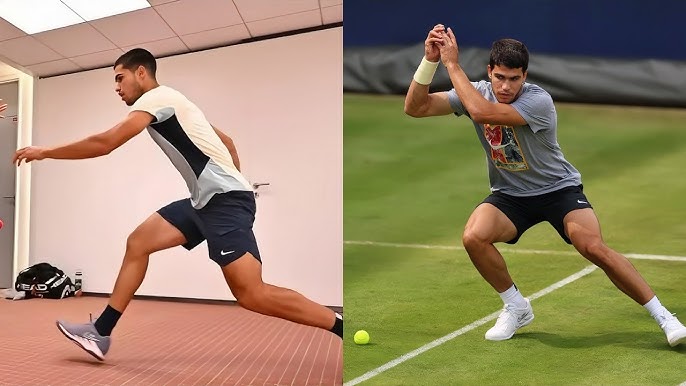
A recent study compared the effects of speed and change of direction training in youth tennis players, with and without the use of a tennis racket. Over eight weeks, participants underwent a training intervention that involved speed and change of direction training, both with and without a racket.
To assess their performance, participants completed a 10-metre linear sprint test to measure speed. Additionally, the 505 change of direction test and the Pro Agility Test were utilised to evaluate their ability to change direction. Muscle power, which plays a crucial role in both speed and direction changes, was assessed through the CMJ test and the 10/5 repeated jump test. All assessments were carried out before and after the training program.
Significant improvements were observed in both groups; however, those who trained without the racket outperformed their counterparts who trained with it. Based on these findings, it seems that training for speed and change of direction without any extra equipment, like a tennis racket, is more effective for enhancing these capabilities in youth tennis players.
New research on optimum Nordic hamstring exercise volume
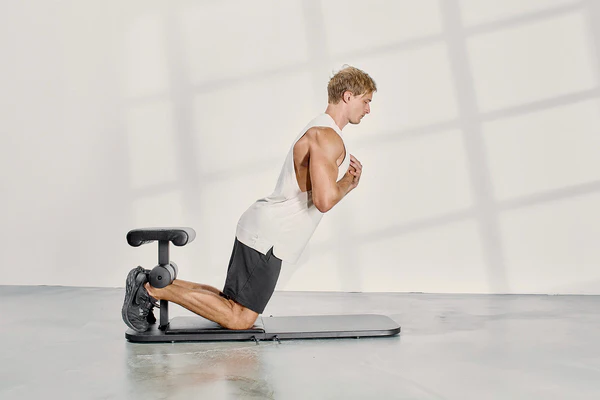
Nordic hamstring exercises are well-regarded for their effectiveness in building hamstring strength, but there has been ongoing debate about the ideal volume necessary to achieve significant strength gains. A recent systematic review and meta-analysis have offered updated recommendations on the training volume for these exercises.
This research analysed 42 studies and suggests that completing between 29 to 64 repetitions of Nordic hamstring exercises each week, spread across 2 to 3 sessions, is likely to lead to notable strength improvements, provided that progressive overload is implemented.
A limitation of the research was the considerable variation in volume among the included studies, with weekly repetitions ranging from just 3 to as many as 103, making it difficult to establish a clear recommendation. Despite this limitation, a scientifically backed guideline for the volume of Nordic hamstring exercise has now been established.
From us this week:
>> New course: Fundamental Movements in Youth
>> New podcast: How the NFL Uses Sports Science to Build Better Fields
>> New infographic: Plant-based Diets for Athletes: Sources of Dietary Protein
>> New article: Hydrotherapy
Access to a growing library of sports science courses
SFS Academy is an all-access membership to premium sports science education.
With SFS Academy, you’ll learn from some of the best coaches around the world as they teach you how to apply the latest research and practice with your athletes.