This week in the world of sports science, here’s what happened…
- New research on chains and elastic bands
- The latest research on pomegranate juice
- Is Perch reliable?
New research on chains and elastic bands
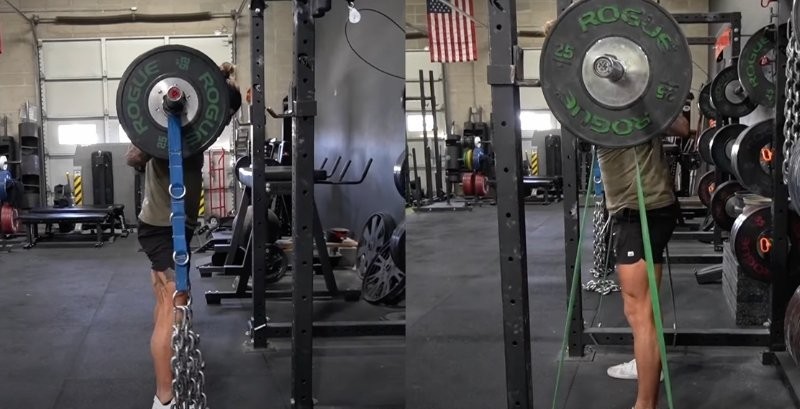
Incorporating chains and elastic resistance bands into various exercises has been practised for many years and is known as variable resistance training. Interestingly, a recent study shed new light on the effects of using chains and elastic bands specifically in the back squat.
The study evaluated participants performing back squats under three different conditions: with just the barbell and free weights, with chains attached, and with elastic bands attached. The researchers concluded that chains are more effective than elastic bands for enhancing power output. In contrast, elastic bands can help decrease spinal loading for those at risk of lumbar spine injuries while still providing sufficient resistance for the lower body. Interestingly, back squatting without any added chains or elastic bands actually resulted in the highest peak ground reaction force.
If you’re interested in learning more about the benefits of chains and elastic bands, be sure to check out our blogs Chain-Resistance Training and Elastic-Resistance Training.
The latest research on pomegranate juice

Pomegranate juice is known for its high polyphenol content and has been suggested to aid recovery in those experiencing delayed-onset muscle soreness (DOMS) and exercise-induced muscle damage. A recent study put this theory to the test with male collegiate volleyball players.
Participants either drank pomegranate juice or a similarly flavoured placebo in the evening before (500ml) and two hours prior (500ml) to an exercise-induced muscle damage protocol that involved performing 200 weighted maximal vertical jumps.
Surprisingly, 48 hours after the exercise-induced muscle damage protocol, pomegranate juice did not outperform the placebo in recovery outcomes. While further research is certainly needed, these findings may come as a disappointment to fans of pomegranate juice!
If you would like to learn more about DOMS, our blog Delayed onset muscle soreness (DOMS): What is it, and how can it be minimised? by the excellent Dr Tom Brownlee is definitely for you!
Is Perch reliable?
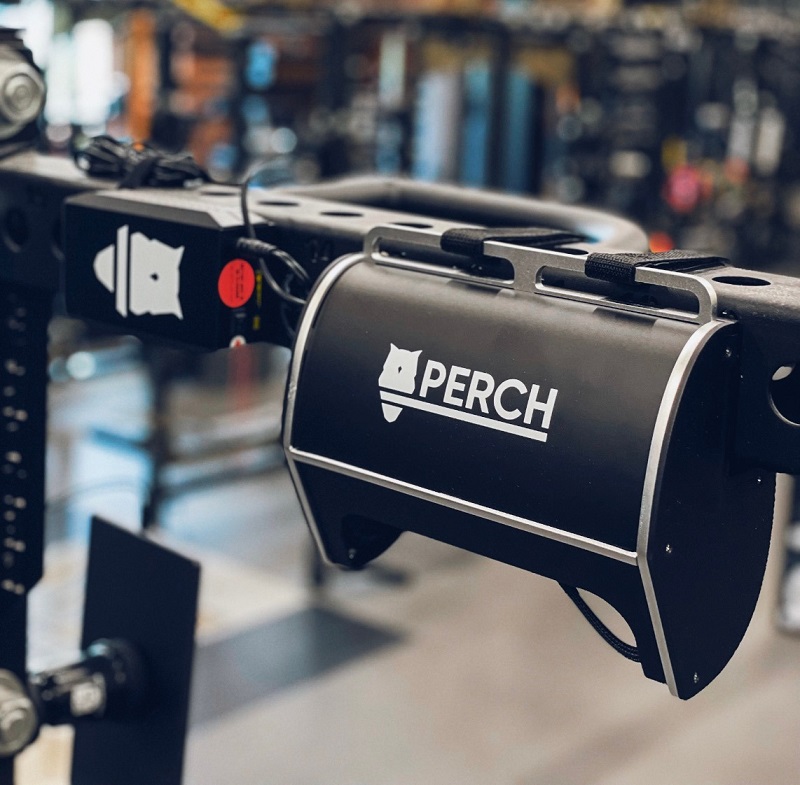
At SFS Weekly, we’ve previously highlighted Perch, an innovative athlete monitoring platform. Well, exciting new research has emerged about Perch!
Perch utilises non-invasive cameras mounted on racks to track barbell velocity. The latest study evaluated the day-to-day reliability of Perch and compared it to a 3D motion capture system. During the study, participants performed Olympic weightlifting derivatives at varying intensities—0%, 40%, 60%, 80%, 90%, and 100% of their estimated one-rep max—across four separate sessions, with the velocity of their lifts being closely monitored.
The findings show Perch can be used to monitor training and provide feedback reliably. However, it’s important to note that its readings tend to be systematically lower than those from the 3D motion capture system. As a result, it’s best to use Perch consistently within its own system rather than switching between it and other devices.
Building on their initial success, Perch has now launched Perch P2, the next generation of their original technology, featuring enhanced capabilities. If you’re curious to learn more about how Perch P2 is pushing the boundaries of performance monitoring in the weight room, be sure to check out our podcast episode The Future of Weight Room Monitoring with Perch P2.
From us this week:
>> New course: Socially Supporting Athletes
>> New podcast: The Challenges of Modern Collegiate Sport
>> New infographic: V02 Max
>> New article: Hydrotherapy
Access to a growing library of sports science courses
SFS Academy is an all-access membership to premium sports science education.
With SFS Academy, you’ll learn from some of the best coaches around the world as they teach you how to apply the latest research and practice with your athletes.